How to Find Out How Your EV Battery Is Really Doing
In paid partnership with Elbilsmagasinet
The battery’s state of health, or State of Health (SoH), is becoming increasingly important as electric vehicles gain a larger share of the market. But how reliable is the battery health that the car itself displays – and what do you learn from an independent load test?
In a collaboration between DEKRA and Elbilsmagasinet, Joakim Hansson, Product Manager for battery testing at DEKRA, explains the difference between the car’s own estimate and an independent load test of the car’s high-voltage battery.
Same Number – Different Measurement Methods
– With the upcoming Euro 7 requirement that battery health must be displayed directly in the car, information about the battery’s condition will become more accessible to the car owner. At the same time, different manufacturers may use different methods to calculate the battery’s state of health. This means that a percentage on the car’s display is not necessarily directly comparable to the corresponding figure from another car or manufacturer, he explains.
According to DEKRA, an important difference is that the car’s own value is often based on calculations and estimates derived from factors such as the car’s usage, charging, and previous driving data. Therefore, it does not necessarily correspond to an actual measurement of the battery’s current performance.
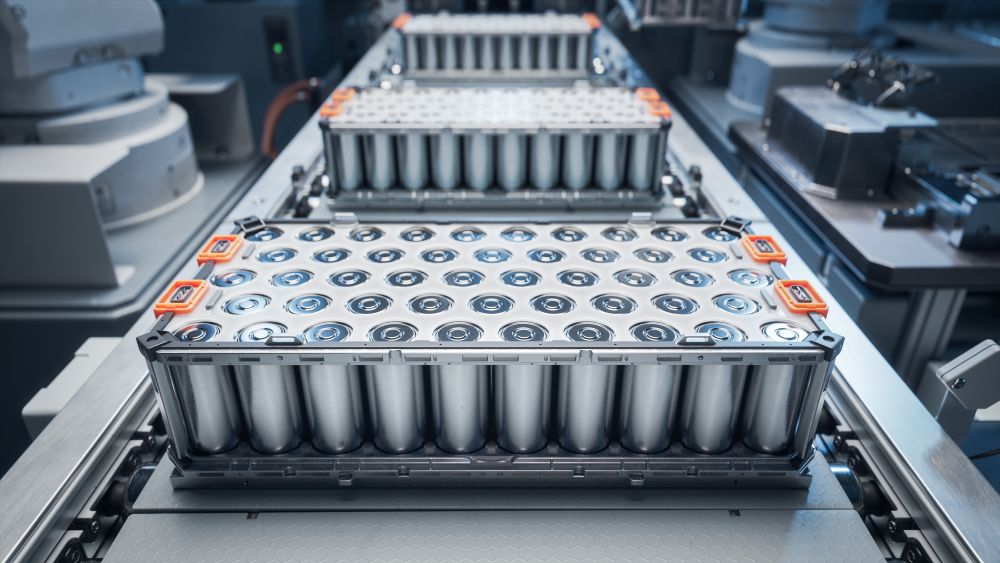
DEKRA Measures the Battery Under Load
DEKRA Battery Test complements the car’s own information by analyzing the battery’s behavior under actual load. During the test, a brief acceleration is performed while DEKRA’s measurement equipment analyzes the battery’s electrical properties.
– A central component is measuring the battery’s internal resistance. As lithium batteries age, their electrical properties change, making resistance an important parameter for assessing the battery’s state of health, continues Joakim Hansson.
The test method has been validated for various car models in DEKRA’s laboratory environment in Germany. To test a new model, DEKRA must first build up reference data through extensive testing.
The Difference Can Go Either Way
In connection with Elbilsmagasinet’s test drives, the cars’ own data were compared with the results from DEKRA’s load test.
The results showed that the car’s own estimate can be both lower and higher than the result from DEKRA’s test. For example, a Volkswagen ID.4 Pro showed 92% in the car’s own system, while the DEKRA test yielded a result of 96%. For a 2022 BMW X1 plug-in hybrid, the car’s system showed 72%, compared to 86% in DEKRA’s load test.
Even a 2020 Polestar 2, which had been driven nearly 178,000 kilometers, received a result of 97% in the DEKRA test, despite the car’s own system showing 89%.
The results illustrate why it is important to understand how an SoH figure has been derived – not just what percentage is displayed.
Battery Lifespan Is Affected by How It Is Used
Battery aging is influenced by several factors. Regularly leaving the car parked for extended periods at a high charge level can be more demanding on the battery than using the car frequently and maintaining a more moderate charge level.
– This does not mean that charging to 100% is harmful when needed. Before a longer trip, for example, a full charge may be entirely reasonable. It is primarily prolonged parking at a high charge level that should be avoided when possible.
A Battery Test Is a Snapshot
A battery test provides valuable decision-making support, but the result should not be interpreted as a guarantee of how the battery will perform in the future.
The test shows the battery’s state of health at the time of testing. It cannot predict exactly how the battery will develop going forward or detect all types of potential future faults.
For those who want to compare different battery tests, it is therefore relevant to examine how the test is conducted, which parameters are measured, and whether the result is based on an independent measurement.
Greater Transparency Regarding EV Battery Health
As the proportion of electric vehicles increases, knowledge about the battery’s condition becomes increasingly important – not least in the used EV market.
– An independent test can provide both buyers and sellers with clearer documentation and contribute to greater transparency regarding one of the car’s most important and valuable components, concludes Joakim Hansson.
Would you like to know more about battery state of health?
With DEKRA Battery Test, you receive independent documentation for assessing the battery’s current state of health.
To watch the full report that Christoffer Gullin from Elbilsmagasinet produced together with DEKRA expert Joakim Hansson, click on the YouTube video below: